
Digital technologies and the Internet have significantly changed the configuration music industry – and at a rapid rate!
Gone are the days of going saving up and heading down to Sanity to splurge $30 on the much anticipated So Fresh CD. Digitalisation has had a drastic impact on all 7 elements of the marketing mix, changing the way we approach the music industry and how the music industry approaches us.
Let’s take a look in detail on what has gone down by going through each element of the marketing mix;
Product:
Back in the day, the music industry supplied us with magnificent things like vinyl’s and CD’s however digitalisation means music now-a-days is nothing but bits and bytes! Music has evolved from physical hardcopies that took up room and were annoying to sort through, to digital data that allows us to access 50 million songs at our fingertips (Apple, 2019). The catalyst of the evolution was the introduction of the iPod back 2001. Ease of access wasn’t the only thing that changed though, sound quality has also vastly improved thanks to digitalisation, according to (Sony.com, 2019) the High-Resolution audio of today is 7 times higher than CD’s and a whopping 29 times higher than MP3.
Price:
Digitalisation has seen pricing models in the industry drastically changed. Moving away from cost per artist or album which set a user back an average of $28 for 11 songs (Sony.com, 2019), the industry has entered an era of subscription based pricing. This is a fixed fee, usually charged monthly and allows a user to access, listen and download an unlimited amount of music for as low as $4.99 (Spotify.com, 2019)
Place:
Whilst physical stores such as Sanity or JB Hi-Fi still exist and sell physical copies of music to consumers, the primary marketplace for music is now located online through services such as Spotify and Apple Music.
Process:
Digitalisation has allowed the music industry to become much more accessible for both consumers and musicians alike. Musicians seeking to collaborate with other artists were once required to meet with and record with the other artist in real time. Digitalisation however means artists are able to record their pieces individually, then splice it all together through the use of various software platforms. This has led to the rise in new genres such as EDM where the foundations for the genre are digital.
People:
Why busk on the streets hoping to be discovered when you could just chuck a video up on YouTube and become the next world-wide sensation? The introduction of video sharing websites made it accessible for regular everyday people to showcase their talent and join the industry.
This was seen with Justin Bieber who when from a regular 12 year old boy to one of the worlds biggest and most popular artists. Do you think he could have achieved such success with the absence of digital technologies?
Promotion:
Social media has become the most powerful tool of promotion. It allows artists to reach millions of fans world-wide to inform them of the release of new music, up-coming tours or any other news they would like to share. Furthermore, fans are able to create fan communities through social media acting as an organic promotional tool. This trumps the effectiveness of whacking up a poster about your gig!
Physical Evidence:
With the take-over of digitalisation, consumers, through the subscription based pricing model no longer “own” music. Music itself is quite intangible however by cancelling a subscription, any music compiled and downloaded by consumers will be deleted, leaving them empty handed.
Tactics to Launch a Social Media Campaign for a Sports Brand
In the modern world of social media consumers are served so many marketing messages that they become accustomed to them and begin to subconsciously ignore them. This is why being different, doing it differently and offering something different is the key to success!
There are 3 main tactics to successfully be ‘different’ and capture the attention of consumers.
1 – Be Creative and Engaging
You do not want to become just another sponsored post that is ignored! You must be creative to stand out from the crowd. To achieve this, use humour! Stats from (Roy Morgan, 2019)show that consumer are 30% more receptive towards ads that use humour makes your brand entertaining, which is exactly the thing your audience is scrolling their feeds in search of.
2- Utilise Technology
Technology is evolving and allowing us to do all sorts of things – use this to your advantage! Augmented Reality is the perfect example of a technology just waiting to be used. It can be used to allow the user to virtually experience the use of the sporting equipment, giving them a feel for the different styles and planting the seed for a strong desire for the product.
Ray-Ban did it! Ray-Ban allows consumers to upload a photo of themselves to virtually try on various styles of sunglasses to see if they suit.
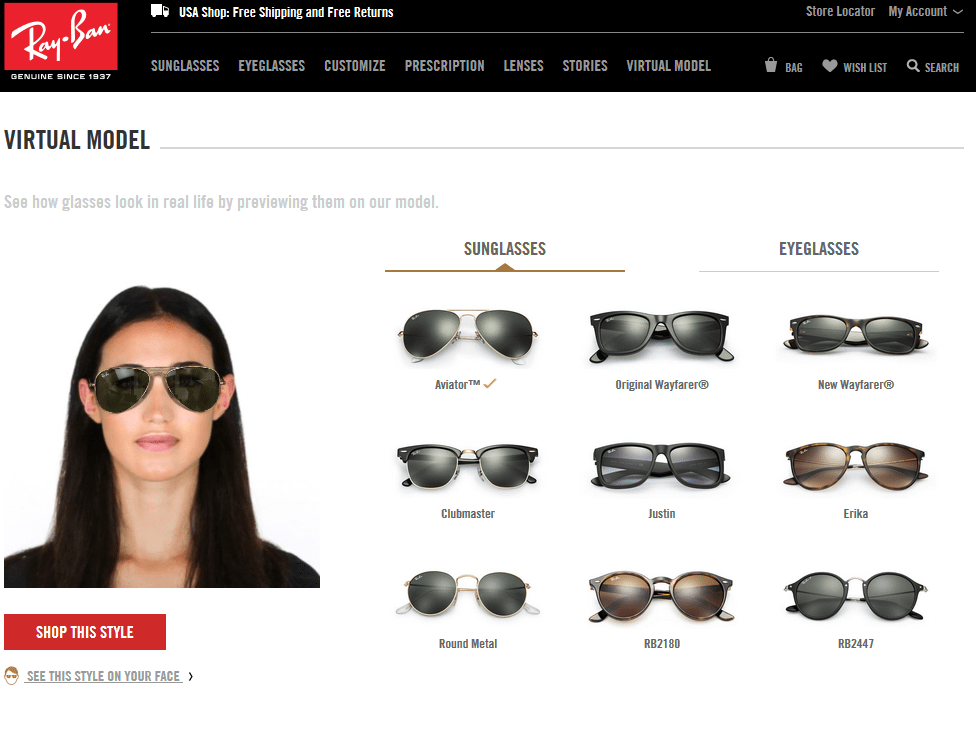
Image Source: http://kkbold.com/augmented-reality-and-your-business/
3- Be Available
The most frustrating thing is not having enough knowledge about a product. Be available to answer the questions your potential customers have. If you can’t afford a social media team to respond to consumers in real time, then implement a chat bot. chat bots are created through Artificial Intelligence and can be programmed to respond to key word found in messages from consumers.
This was seen with TechCrunch, an online publication. The chat-bot allows consumers to instantly and directly interact with the brand, forming a relationship and leaving the consumer with a positive, informed experience.
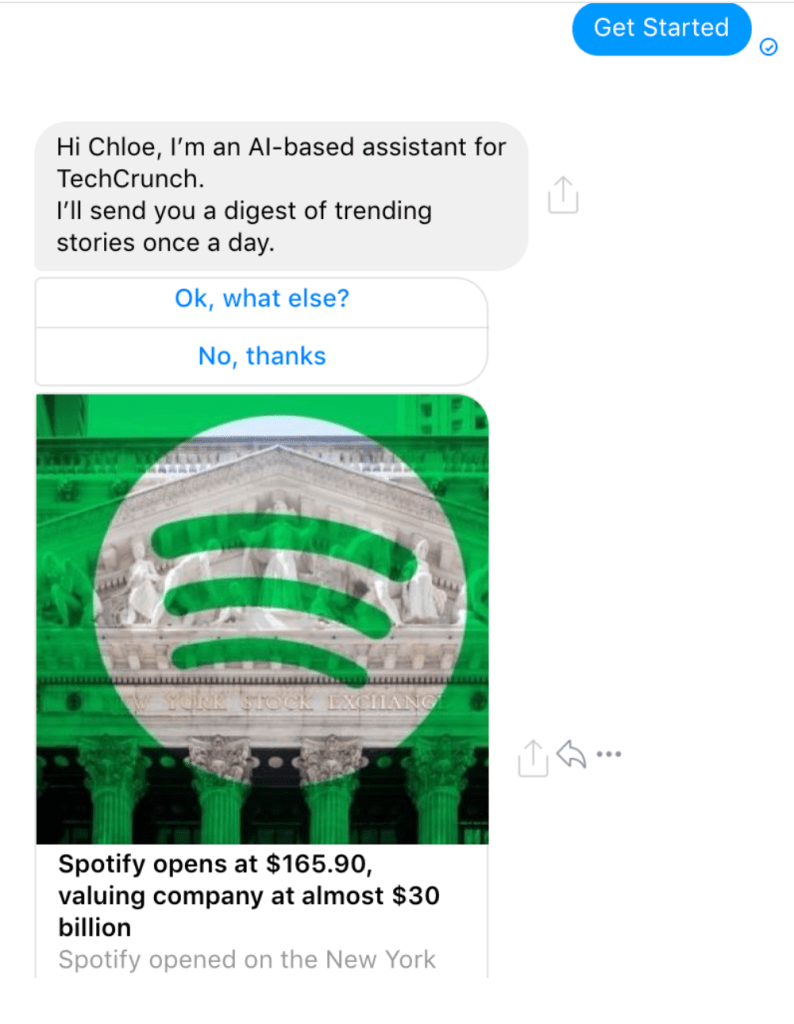
Image Source: https://sproutsocial.com/insights/social-media-marketing-examples/
Together these three tactics are likely to increase the successfulness of the sporting brand. Creative humour will gain the consumers attention and form a preliminary, positive relationship with them. This will likely create interest in the product so they will search for more information about the products. Here the use of AR and other relevant technologies will allow the consumer to explore product options. Finally, if the consumer has any questions or would like to make a purchase, they can do so directly and instantly through the chat bot.
References
Apple. (2019). Music. [online] Available at: https://www.apple.com/music/ [Accessed 8 Sep. 2019].
Roy Morgan. (2019). Social Media. [online] Available at: http://www.roymorgan.com/products/social-media [Accessed 8 Sep. 2019].
Sony.com. (2019). Sound Quality Comparison of Hi-Res Audio vs. CD vs. MP3 | Sony US. [online] Available at: https://www.sony.com/electronics/hi-res-audio-mp3-cd-sound-quality-comparison [Accessed 8 Sep. 2019].
Spotify.com. (2019). Music for everyone.. [online] Available at: https://www.spotify.com/au/ [Accessed 8 Sep. 2019].
 The Weekly Digital