Hey there! I’m Rowan, a 3rd year student studying a Bachelor of Business (Marketing)/ Bachelor Communications and Media (Marketing Communications) – its a mouthful I know! Anyway, this blog is an assessment for my digital marketing unit, but hopefully you find it to be a bit of fun and something interesting to browse over! – Enjoy!
Digitalisation and the Music Industry

Digital technologies and the Internet have significantly changed the configuration music industry – and at a rapid rate!
Gone are the days of going saving up and heading down to Sanity to splurge $30 on the much anticipated So Fresh CD. Digitalisation has had a drastic impact on all 7 elements of the marketing mix, changing the way we approach the music industry and how the music industry approaches us.
Let’s take a look in detail on what has gone down by going through each element of the marketing mix;
Product:
Back in the day, the music industry supplied us with magnificent things like vinyl’s and CD’s however digitalisation means music now-a-days is nothing but bits and bytes! Music has evolved from physical hardcopies that took up room and were annoying to sort through, to digital data that allows us to access 50 million songs at our fingertips (Apple, 2019). The catalyst of the evolution was the introduction of the iPod back 2001. Ease of access wasn’t the only thing that changed though, sound quality has also vastly improved thanks to digitalisation, according to (Sony.com, 2019) the High-Resolution audio of today is 7 times higher than CD’s and a whopping 29 times higher than MP3.
Price:
Digitalisation has seen pricing models in the industry drastically changed. Moving away from cost per artist or album which set a user back an average of $28 for 11 songs (Sony.com, 2019), the industry has entered an era of subscription based pricing. This is a fixed fee, usually charged monthly and allows a user to access, listen and download an unlimited amount of music for as low as $4.99 (Spotify.com, 2019)
Place:
Whilst physical stores such as Sanity or JB Hi-Fi still exist and sell physical copies of music to consumers, the primary marketplace for music is now located online through services such as Spotify and Apple Music.
Process:
Digitalisation has allowed the music industry to become much more accessible for both consumers and musicians alike. Musicians seeking to collaborate with other artists were once required to meet with and record with the other artist in real time. Digitalisation however means artists are able to record their pieces individually, then splice it all together through the use of various software platforms. This has led to the rise in new genres such as EDM where the foundations for the genre are digital.
People:
Why busk on the streets hoping to be discovered when you could just chuck a video up on YouTube and become the next world-wide sensation? The introduction of video sharing websites made it accessible for regular everyday people to showcase their talent and join the industry.
This was seen with Justin Bieber who when from a regular 12 year old boy to one of the worlds biggest and most popular artists. Do you think he could have achieved such success with the absence of digital technologies?
Promotion:
Social media has become the most powerful tool of promotion. It allows artists to reach millions of fans world-wide to inform them of the release of new music, up-coming tours or any other news they would like to share. Furthermore, fans are able to create fan communities through social media acting as an organic promotional tool. This trumps the effectiveness of whacking up a poster about your gig!
Physical Evidence:
With the take-over of digitalisation, consumers, through the subscription based pricing model no longer “own” music. Music itself is quite intangible however by cancelling a subscription, any music compiled and downloaded by consumers will be deleted, leaving them empty handed.
Tactics to Launch a Social Media Campaign for a Sports Brand
In the modern world of social media consumers are served so many marketing messages that they become accustomed to them and begin to subconsciously ignore them. This is why being different, doing it differently and offering something different is the key to success!
There are 3 main tactics to successfully be ‘different’ and capture the attention of consumers.
1 – Be Creative and Engaging
You do not want to become just another sponsored post that is ignored! You must be creative to stand out from the crowd. To achieve this, use humour! Stats from (Roy Morgan, 2019)show that consumer are 30% more receptive towards ads that use humour makes your brand entertaining, which is exactly the thing your audience is scrolling their feeds in search of.
2- Utilise Technology
Technology is evolving and allowing us to do all sorts of things – use this to your advantage! Augmented Reality is the perfect example of a technology just waiting to be used. It can be used to allow the user to virtually experience the use of the sporting equipment, giving them a feel for the different styles and planting the seed for a strong desire for the product.
Ray-Ban did it! Ray-Ban allows consumers to upload a photo of themselves to virtually try on various styles of sunglasses to see if they suit.
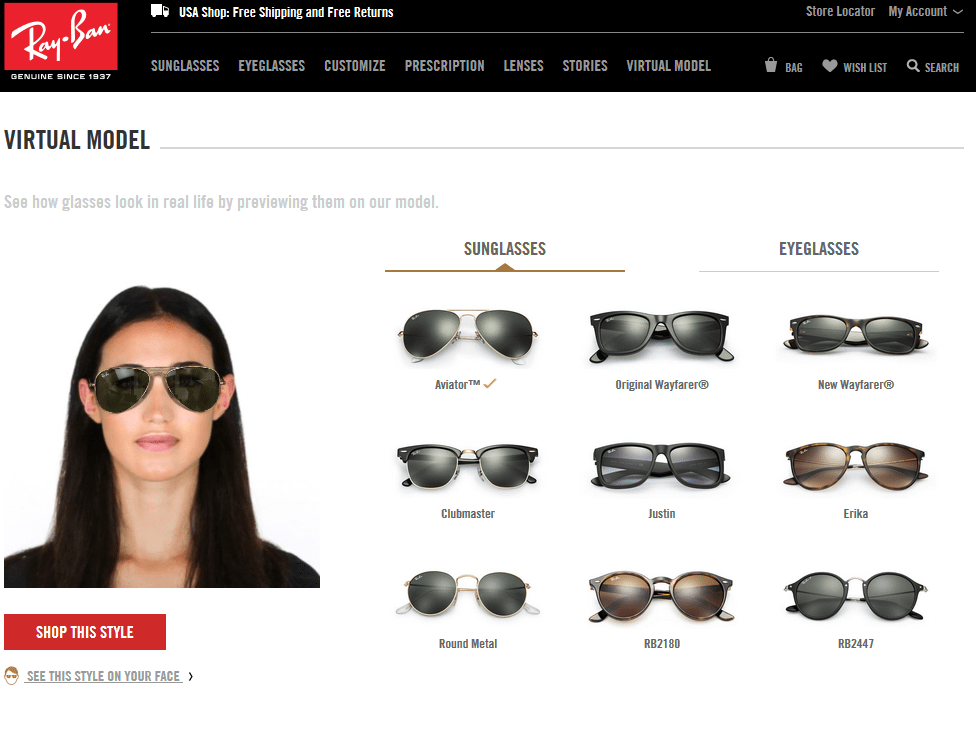
Image Source: http://kkbold.com/augmented-reality-and-your-business/
3- Be Available
The most frustrating thing is not having enough knowledge about a product. Be available to answer the questions your potential customers have. If you can’t afford a social media team to respond to consumers in real time, then implement a chat bot. chat bots are created through Artificial Intelligence and can be programmed to respond to key word found in messages from consumers.
This was seen with TechCrunch, an online publication. The chat-bot allows consumers to instantly and directly interact with the brand, forming a relationship and leaving the consumer with a positive, informed experience.
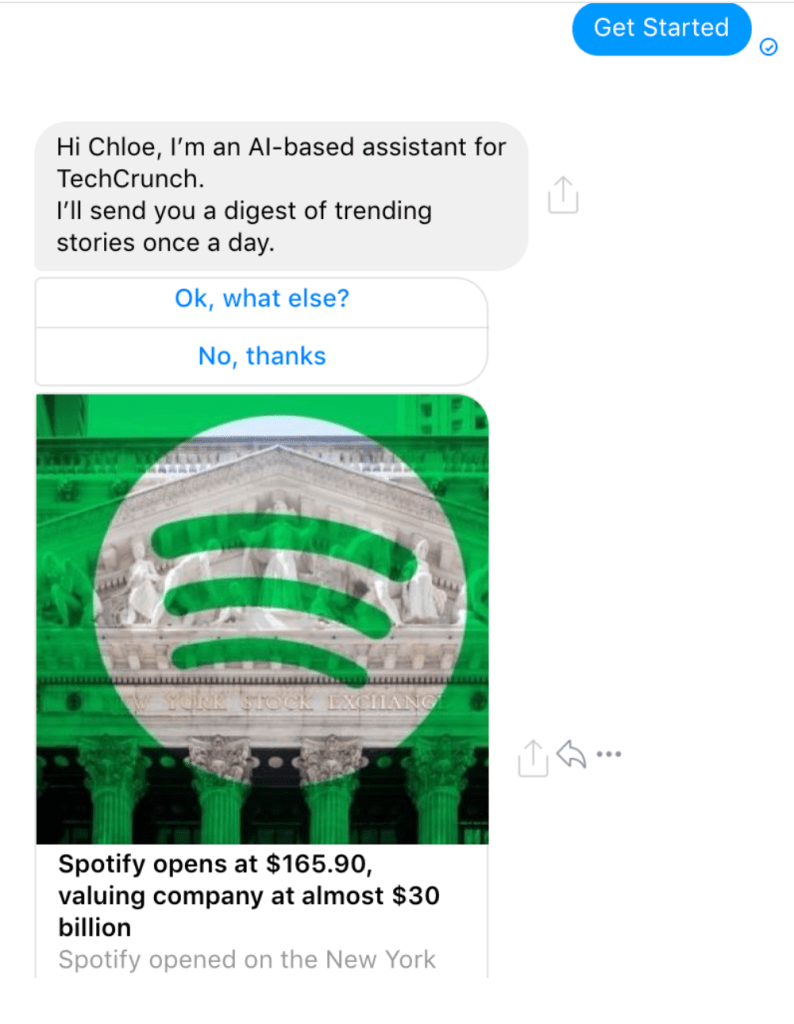
Image Source: https://sproutsocial.com/insights/social-media-marketing-examples/
Together these three tactics are likely to increase the successfulness of the sporting brand. Creative humour will gain the consumers attention and form a preliminary, positive relationship with them. This will likely create interest in the product so they will search for more information about the products. Here the use of AR and other relevant technologies will allow the consumer to explore product options. Finally, if the consumer has any questions or would like to make a purchase, they can do so directly and instantly through the chat bot.
References
Apple. (2019). Music. [online] Available at: https://www.apple.com/music/ [Accessed 8 Sep. 2019].
Roy Morgan. (2019). Social Media. [online] Available at: http://www.roymorgan.com/products/social-media [Accessed 8 Sep. 2019].
Sony.com. (2019). Sound Quality Comparison of Hi-Res Audio vs. CD vs. MP3 | Sony US. [online] Available at: https://www.sony.com/electronics/hi-res-audio-mp3-cd-sound-quality-comparison [Accessed 8 Sep. 2019].
Spotify.com. (2019). Music for everyone.. [online] Available at: https://www.spotify.com/au/ [Accessed 8 Sep. 2019].
IKEA – A Case Study on Innovation
The year is 1940 and the world has stumbled across an entrepreneurial genius by the name of Ingvar Kamprad. Ingvar’s innovative attitude to do what has not been yet been done shot him straight to the top of the furniture retailing market with his business IKEA. The business model of IKEA at the time was like no other, dominating the market in terms of its packaging, pricing structure and retailing.
The most significant innovation by IKEA was sparked as an employee removed a leg off a table to enable the product to more easily fit into the customers vehicle. This simple task acted as the catalyst for what has become the worldwide phenomenon of flat packed furniture, requiring self-assembly by the customer.
IKEA’s entire product range all come flat packed, mostly utilising one simple tool, the Allan key, which is included with every product. This simple strategy has allowed IKEA to significantly reduce manufacturing and distribution costs which leads to the next innovation of its pricing structure.
The ability to mass produce and distribute its product range at only one third of its leading competitors’ costs, is the key to IKEA’s success. Rather than price its items with an insanely high mark-up, IKEA chose to offer its low cost advantage to its customers and ultimately take advantage of selling mass quantities at lower prices.
But why was IKEA so successful in selling high quantities of stock? Low prices played a large role in IKEA’s success, however its innovation in retailing was second to none during its growth period. IKEA understood the importance of emotional attachment and customer experience and thus it developed the showroom strategy. IKEA successfully incorporated the direct to consumer warehouse style model and the customer experience model to create showrooms where consumers are able to experience products for themselves before picking the flat packs out of the warehouse themselves.
Through its direct to consumer, low cost strategy, IKEA has become one of the world’s most unique and largest furniture retailers in over 29 country groups offering over 12000 different products.
Source
IKEA /AU/EN. (2019). About the IKEA group – IKEA. [online] Available at: https://www.ikea.com/ms/en_AU/this-is-ikea/about-the-ikea-group/index.html [Accessed 5 Sep. 2019].
eBay – An Analysis on Business and Revenue Models

eBay is an online marketplace powered by e-commerce that uses the ‘first mover’ approach to reinvent itself and stay ahead of the status quo. eBay’s transactional business model includes both business to consumer, where 3rdparty businesses often use the platform as a means of reaching a customer base and consumer to consumer where consumers are able to use the platform to sell their private items to other consumers.
Hang on a minute; That means eBay doesn’t really have to do anything?
Correct! This very factor is what speaks to eBay’s success. Its business model allows it facilitate millions of transactions a day, without the need to own any inventory – its genius and it works!
So if eBay doesn’t own the stock being sold, then how does it make money?
It’s pretty simple really!
eBay charges sellers on the site a fee to list their products once they list more than 40 items a month it doesn’t seem like much, but when you multiply it by the thousands of listings by regular sellers it quickly adds up!
eBay however places a larger focus on commissions. In Australia, eBay charges sellers 10.9% of the final sale price on each item. This model is the core revenue generating part of the business and is highly successful when applied to regular sellers.
Finally, eBay generates revenue form sellers who wish to further promote their products on the site. This includes ‘featured’ sales on eBay’s homepage and higher page rankings when key words are searched. Similarly, eBay allows advertisers to access their audience and display advertisements throughout the site.
eBay has a highly successful business and revenue model, however one recommendation can be made in an attempt to increase revenue. eBay should remove or lower the free listing fees period for casual sellers as many casual sellers are taking advantage of eBay’s customer base. The sales generated by casual sellers are often of low value thus the commission model is ineffective in generating high returns for eBay in this scenario. The introduction of this model would see eBay revenue raised substantially for casual sellers.
Source: eBay. (2019). Selling on eBay | Electronics, Fashion, Home & Garden | eBay. [online] Available at: https://www.ebay.com.au/sl/sell?sr=wnstart [Accessed 5 Sep. 2019].
Social Media Today
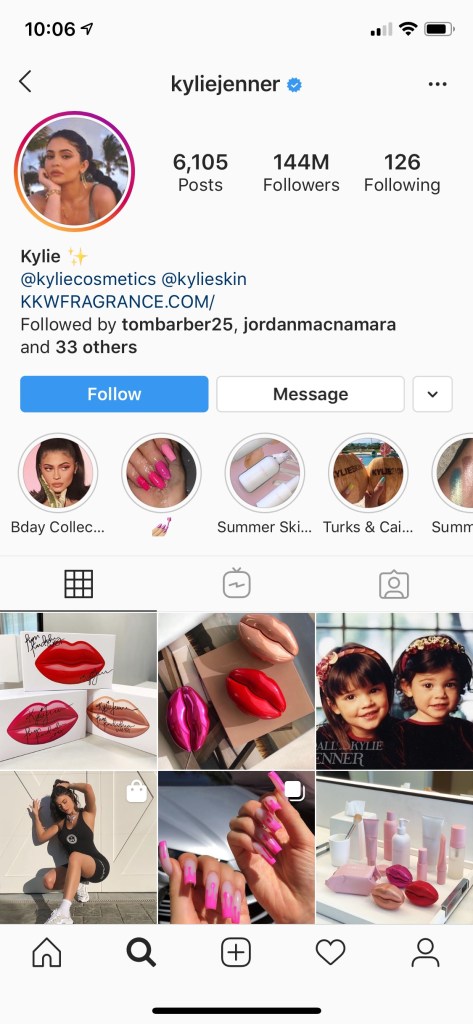
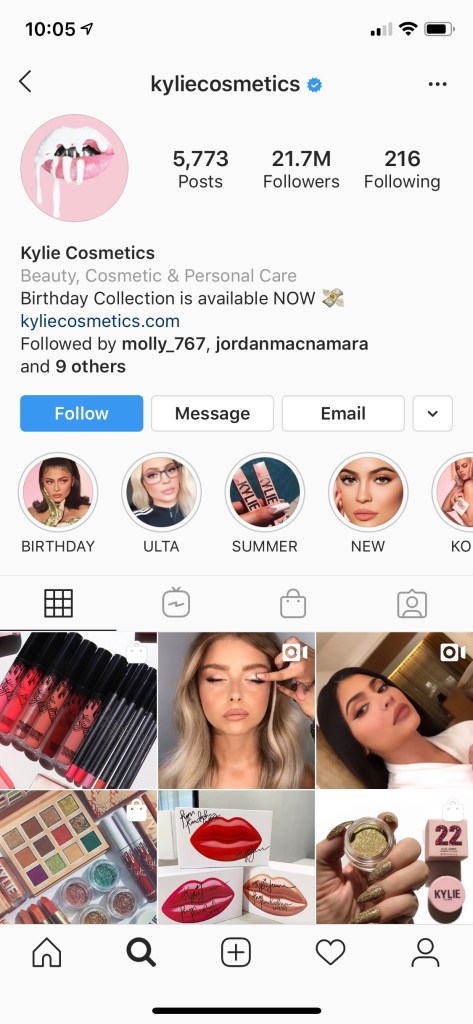
Like all things in marketing, social media should be implemented strategically, so of course there is a framework to guide us on how to implement successful use of social media. I’m going to apply the social media framework by (Felix et al 2016) to Kylie Jenners business, ‘Kylie Cosmetics’:
Scope
When Kylie uses social media, she encourages her followers to respond, interact and completely engage with her content. This ‘collaboration tool’ style appears to facilitate an environment where each post becomes a conversation that then goes on to inspire her audience to share their stories publicly through social media. Her audience responds well to this strategy, creating a strong community that ultimately boosts her brand in areas such as awareness, engagement and sales.
Culture
It’s no secret that the Kylies team believes in the power of social media, I mean, that’s the very thing that got her to where she is today. This demonstrates that they have taken the modernist approach of being open and flexible to social media, with regard to its use to enhance the brand.
Structure
With social media playing such a vital role in Kylies success, you might think that a hierarchical system where only she or her top executives have full control over content that is posted. That is not the case however, Kylie’s modernist approach to social media infers that her team would have a ‘network’ structure in which there is a level of freedom where most members of her team is responsible for social media marketing activities (Chaffey et al, 2019).
Governance
Although having creative freedom as discussed above, Kylies team would be strictly governed. This means there are a set of rules and guidelines that outlines the use of social media and identifies forms of misconduct. The purpose of governing social media activity is to protect the brand from being publicly associated with any activity that the brand does not agree with.
Now lets interpret what is happening in the financial Services industry in relation to its use of social media
Initially the industry was a bit sceptical of the big wide world of social media. They looked past any possible benefits and focused on the negatives – being that their brand could be subject to threats and ultimately be left worse off. Obviously, this wasn’t the case though, the industry now thrives off the benefits of social media as most brands have repositioned themselves away from traditional banking styles to fit in with the modern demographic.
But what does this mean?
Well traditionally banks and financial institutions were positioned as powerful figures that loomed over everyone and were in control. As society has evolved however, the banks have been put back in their place and are being held accountable for their actions by consumers. This modern environment means that financial institutions must change perceptions to be seen as a friendly community brand, that is there for you when you need them. Social media has become the obvious choice of communication channel as it facilitates an environment where institutions in the industry can remain relevant and engage directly with consumers.
Thanks to social media enabling the industry to identify opportunities and develop strategies, the industry is now presented as more inclusive, accessible and community based thus we are seeing the introduction of many of new ‘non-banks’ popping up here and there as the market has opened up and expanded.
References:
Chaffey, D. and Ellis-Chadwick, F. (2019). Digital marketing. Harlow: Pearson, pp.64-65.
Felix, R., Rauschnabel, A. and Hinch, C. (2016) Elements of strategic social media market ing: A holistic framework, Journal of business Research, 70, 118–26.
My Puppy in Slow-Motion
Click to see Kya the 9 month old Cavoodle doing dog stuff in Slo-Mo
My Customer Experience
Have you heard of HelloFresh? If you haven’t – it’s a subscription service that saves you the hassle of having to meal plan or going to the grocery shop each week because they send you fresh meal kits for you to cook at home.

Image Source: https://www.kisspng.com/png-hellofresh-meal-kit-united-states-meal-delivery-se-5466928/
I recently made a purchase from HelloFresh and was pretty satisfied with my #digital experience – so satisfied that I’m going to share it with you!

Image Source: https://www.redbubble.com/people/slappo/works/29077964-sharing-is-caring?p=poster [Accessed 22 Aug. 2019].
So how did it all start?
One day, my partner and I were sitting there with a blank shopping list in front of us, struggling to think of new dinner ideas before we finally gave up and turned to our mate google for some help – that’s when we stumbled upon a cheeky little #GoogleAdWords ad for HelloFresh that would ultimately change how our household works for the better!

So, we perused around on a bunch of competitors websites but ended up back with HelloFresh; 1. Because we preferred their meals but 2. Because their website was so user-friendly and nice that it just 100% sold us on the benefits of a subscription based meal kit! No more thinking about what to cook or having to go down to woollies after a big day at work? YES PLEASE! Where do we sign up!? – Well actually funny I should say that because we were directed to a nice little iPhone app where we could do just that – how convenient!

That isnt all the app is good for though, we are able to choose what meals we want, what time/day that are delivered, how many meals we want, manage our subscription and get updates on what’s going on! Not a bad example of providing a good sense of perceived control if you ask me! (Rose and Hair 2011)
Anyway, so we chose everything we wanted and got to the dreaded checkout section.. But hey- we were pleasantly greeted by the option to use what we believe to be a secure payment option – Paypal. ~ Trust [Check] low perceived risk [Check] ~ (Rose and Hair 2011)
Not everything went smoothly though, when our meal kit arrived some of the ingredients had been damaged in transport/weren’t as fresh as advertised. This destroyed our faith in the service pretty quickly, however It wasn’t all doom and gloom. HelloFresh’s digital presence was able to turn it all around as they have a Facebook Messenger page that allowed me to effortlessly send in my complaint and within minutes chat with someone and receive some pretty generous compensation for the mishap. So just like that, by simply resourcing a digital team to interact with customers, I went from being dissatisfied with the service to a now loyal, return customer of over 8 months.
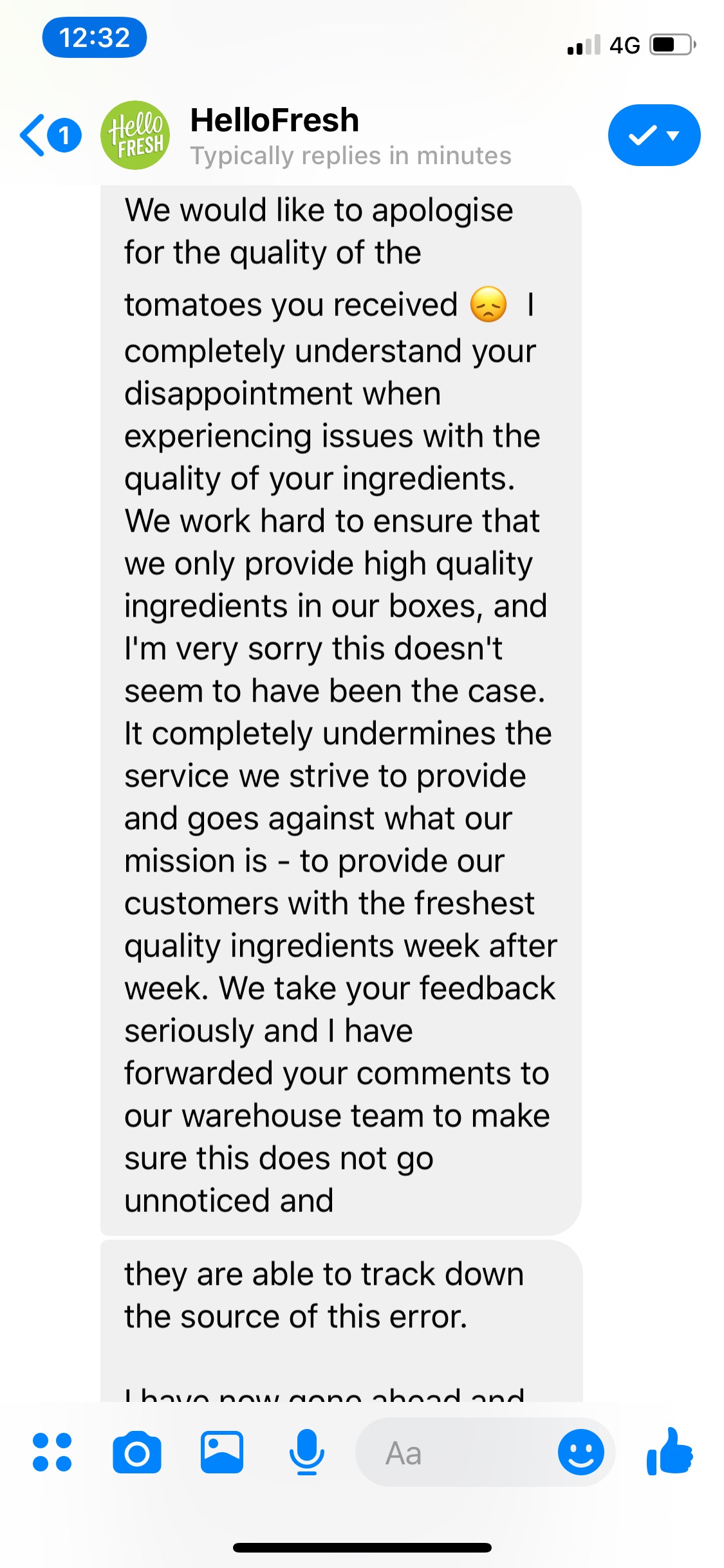
I guess that sums it up pretty well, #DigitalMarketing by HelloFresh influenced my cognitive and affective status, into becoming a satisfied return customer, simply by acting upon the 8 antecedents that work to understand the online customer experience. (Rose and Hair 2011)
And now for a bit of fun.. Here’s my puppy doing stuff in slow motion!
References:
Chaffey, D. and Ellis-Chadwick, F. (2019). Digital marketing. Harlow: Pearson, pp.64-65.
Redbubble. (2019). ‘Sharing is caring’ Poster by slappo. [online] Available at: https://www.redbubble.com/people/slappo/works/29077964-sharing-is-caring?p=poster [Accessed 22 Aug. 2019].[IMAGE]
Rose, S. and Hair, N.C. (2011). Online customer experience: a review of the business-to-consumer online purchase context, International Journal of Management Reviews, 13 (1), 24-39. https://onlinelibrary.wiley.com/doi/full/10.1111/j.1468-2370.2010.00280.x
Image Source: https://www.kisspng.com/png-hellofresh-meal-kit-united-states-meal-delivery-se-5466928/
What Is Topic This All About?
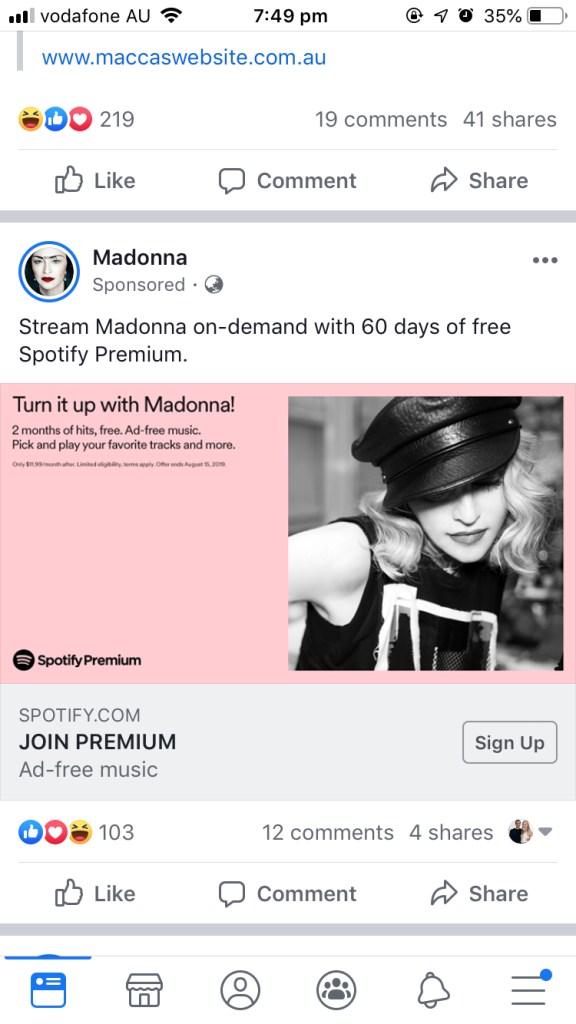
So what is #digitalmarketing? It is defined by (Chaffey and Ellis-Chadwick, 2019) as the process of achieving set marketing objectives by integrating digital technologies and digital mediums into the marketing process. Yeah…cool.. But what does that actually mean? Think about social media platforms, digital billboards, mobile phones, tablets, and virtual audiences; digital marketing is the process of not only reaching a general target market, but specifically targeting people with digitally accessible interactive and engaging content via these channels to promote a brand and ultimately influence a purchase decision that contributes to the core business function of earning a profit. Still curious? Check out a couple of examples of Spotify using sneaking ads into Facebook Newsfeed and Google search results below – That’s digital marketing in the works!

How has eBay had to evolve its online brand proposition and communicate it to achieve continued growth.
Content and theory has been adapted from the source: Chaffey, D. and Ellis-Chadwick, F. (2019). Digital marketing. Harlow: Pearson.
As society and technology evolve, the need for brands to evolve with modern trends in is critical for success, thus eBay has recently evolved its online brand proposition.
Perhaps the most annoying factors of online bargain hunting are hidden costs and the risk of being scammed. Aware of this, eBay has evolved to promise users on the purchasing side of the site, full transparency when it comes to product pricing, clearly showing the total price upfront when engaging with the ‘buy it now function’. This has evolved from traditional models of marketing where seemingly low prices lured in unsuspecting buyers before being shocked by disproportionate shipping costs.

Image Source: me.me.com, Availableat; https://me.me/i/me-spends-200-plus-online-shopping-shipping-5-99-me-shipping-3500259
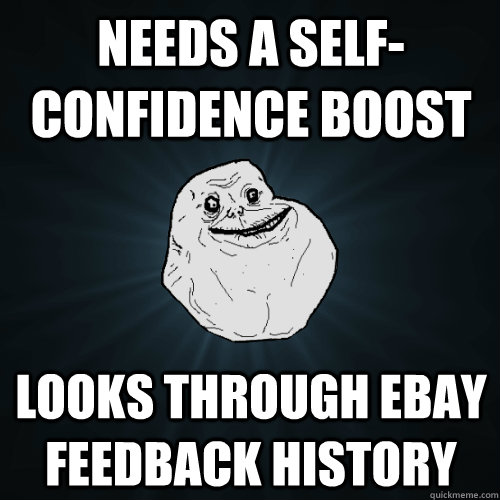
Shoppers are also said to experience minimised risk when shopping with the site, thanks to the ‘trust and safety programs’ that incorporate user feedback to determine trusted buyers and ease your mind. This has evolved to gain the trust back from consumers that has been lost from dealings with false or misleading listings, commonly resulting in a financial loss.
What’s more, buyers are able to quickly find items with ease due to eBay placing a high priority on mobile friendly e-commerce, even incorporating artificial intelligence ‘shopbot’ features on platforms like Facebook Messenger and Google Assistant to help filter through listings. This demonstrates that eBay is committed to actively improve the experience of shoppers, by providing modern-day solutions to modern-day ‘problems’.
On the sellers side, eBay proposes a fast, easy, intuitive approach to listing items by developing automatic posting software. This is most effectively used by frequent sellers, retiring the tedious task of posting multiple listings. Here, eBay hopes to keep sellers loyal to the site, by ensuring its service is simple, yet effective and competitive.

Despite modern society living in a ‘digital-age’, eBay has found that digital channels have had little effect in influencing perceptions about the site, however traditional platforms such as TV have been successful. eBay will therefore be placing a large focus on traditional platforms to communicate the benefits of their new brand proposition to their audience. This strategy hopes to achieve continued growth of the brand, allowing it to dominate the online marketplace scene.
You might think that eBay’s revenue model revolves around advertising, however advertising doesn’t actually account for much of eBay’s revenue stream. Traditionally revenue is generated from commission from completed sales, however, in recent times this model has been expanded. eBay has gone down the path of strategic acquisitions and alliances, expanding its infrastructure footprint to cover a large proportion of merchandise categories. This model has allowed eBay to successfully minimise competition and strengthen its brand image to ultimately achieve continued growth in the market.

 The Weekly Digital